Showing posts with label book review. Show all posts

Thursday, 14 April 2016

Book Review: The Girl on the Train


I picked up this book on a recent work trip to France - I thought it was a great opportunity to really dedicate some time to it, with some flights and some layover time to really keep a fast pace with this much-hyped thriller. Another push to get it read as part of my Spring reading list was that the film is due to come out in October, and stars Queen Emily Blunt, ruler of all mankind. 

This book tells the story of Rachel, a depressed alcoholic whose life is in tatters. She takes the train to work everyday, and in the process of so doing, manages to weave her way in to the lives of a streetful of neighbours. Dark things ensue. (Trying not to give spoilers!) This book was doing the rounds of Booktube and Goodreads and newsletters and there was a lot of buzz surrounding it. It was comparable, in my mind, to Gone Girl, which I had loved, so I was really looking forward to reading it. 

I thought the plot of the novel was well paced, and that the story had enough information, and enough gaps and holes, that it kept the reader engaged and interested. However, as we started to approach the end, it became somewhat predictable. I worried that I had missed something everyone else hadn't, as I certainly didn't think it was as mind-blowing or as unexpected as everyone raved it was. The main characters of the novel were a bit of a bugbear for me, I thought they were all horrid. As lost and as much of a mess as Rachel was, I just found her so irritating that I didn't sympathise with her in any way. Unfortunately, character development wasn't a highlight of this novel at all, I didn't feel like Rachel's character really moved on, even after the twists and revelations came out. 

I enjoyed the writing of this book, and I thought the author did a good job of transporting the reader to this quite dank, dark, miserable everyday English life. The novel felt grey and rainy, and as dark and depressing as it was meant to be. I would recommend this book, I think, but probably after some other books (definitely read Gone Girl which does a hell of a better job of this genre). I hold out more hope for the film!

Overall rating - 2.9/5


Thursday, 7 April 2016

Book Review: Oliver Twist by Charles Dickens


As part of my 32 goals that I have set myself to achieve before I turn 33, I have pledged to read ten classic books. I have a series of goals to reach and a good few of them have a lot to do with reading! Quelle surprise. My track record of classic fiction prior to undertaking this challenge was woeful. I never had spent much time reading classic literature, presuming them above my station, too challenging, and a little bit daunting.

I couldn't have been more wrong. This is the first classic I have read since I started this blog, but it's the second Charles Dickens novel I have read as part of the challenge having read Great Expectations in 2014, and I read A Christmas Carol prior to this challenge.

I was, of course, familiar with the storyline of Oliver Twist prior to picking it up as it is one of those stories that just seems to seep into our collective conscious! I was really surprised how much I enjoyed this book, though, even though I had expected to enjoy it, I really, really loved it. Charles Dickens's writing is among the best I certainly have ever seen, and among the best this world has ever seen I would guess.

His characters are so well rounded, complex and interesting. I particularly love the way Dickens writes about Victorian London, in a way I have never read before and the way he transports you there works so beautifully and translates so well to screen.

His portrayal of women at this time was incredibly interesting, giving the reader a feel for how women fit into the society of the time, the irony being Nancy turns out to be the heroine of the piece. He jolts the reader back to reality when Nancy's fate is decided for her. Women take a back seat in Victorian England, whether you have something worthwhile to contribute or not.

I will defintiely be picking up more of Dickens work in the future, Oliver Twist was the fifth of my classics challenge, so I am half way there. I watched Oliver! following reading this book, and I am definitely interested in the BBC series which I can rent or buy to stream on Amazon, I believe.

Overall score - 5/5

Saturday, 5 March 2016

Book Review: War Horse


For those of you who have been following my blog for any length of time, you will know that I have been on a bit of a mission to swot up on my knowledge of both World Wars. As part of that, I have been trying to bring the era to life through books and films and TV. War Horse was one of those novels that I really wanted to read for that purpose. I first became aware of it, after having seen the stage production on a visit to Toronto. The stage production really blew my mind, the staging was ingenious, the costumes and the way they portrayed these huge beasts and the terror of war on a stage was mind-blowing, I would really recommend it to anyone.

The book tells the story of Joey, a horse who has been sold to a farmer. Joey finds himself being trained to work on the farm, threatened by the farmer who has purchased him. He finds a very loving relationship with the farmer's son, Albert. Joey and Albert are separated when Joey is sold to the army and goes to fight on the front line with British soldiers. In his time at war, Joey fights with the British, is captured and employed by the German army, and manages in an extraordinary twist of fate to find his way back to Albert once again.  

The book is charming, short and lovely, and definitely a children's book. The whole story is told from Joey's point of view, which is lovely. It is WW1 for kids, which isn't necessarily a bad thing, maybe just not what I was after.

Overall score - 3/5

Friday, 12 February 2016

Book review - The Invention of Wings


**This review may contain spoliers**

This book had been on my radar for a long time, following the novel making the Oprah 2.0 Book Club list. I don't tend to read along with book clubs like this, but I certainly pay attention to the titles that make the lists and add them to my excessive TBR pile on Goodreads, which is a site that if you aren't aware of - please, please go right now and make an account. (You can thank me later.) I was aware of Sue Monk Kidd, having read her Secret Life of Bees a few years ago. I really enjoyed SLOB, so knowing the author, the premise of the novel and the fact that Oprah said it was good, I was expecting really good things.
Besties

And, my oh my, was I delighted I picked this up.

The Invention of Wings follows the paths of two main characters - Sarah Grimké, a girl born into a wealthy family in Charleston, South Carolina; and her slave, Handful. Sarah (along with her sister Nina) were powerful figures in the early abolitionist movements, and did a lot for the rights of women in America. I learned after reading that Handful was also a real character, gifted to Sarah at a young age. She died soon after, though. Sue Monk Kidd gave an interview where she described Handful as "but a footnote in history" and this novel was a telling of what might have been. We meet the girls at quite a young age as the novel opens, when Handful is gifted to Sarah. Sarah knows from a very early age that she does not want to be part of a society than can tolerate, much less exploit, slavery and persecution. The novel then follows both Sarah and Handful through their lives, as they are parted and ultimately find one another again.

The character of Sarah's mother ('Missus' as she's known to the slaves) is a powerful figure in the novel. She is the overseer of the prisons in which both Handful and Sarah find themselves. She is the master of Handful, and Handful's mother, Charlotte, whom she treats deplorably. Sarah, as would be typical of girls from well-heeled families of the time, was expected to be seen and not heard. Opinions, hopes, dreams and aspirations were all discouraged in favour of obedience, religion, looks and behaviour. Sarah knows that there is more to her character and should be more to her life than that which is offered to her in Charleston society. Sarah's desire was to follow her father's footsteps in the field of law, however she is reminded that women don't have those kinds of choices.

"Your father believes you are an anomalous girl with your craving for books and your aspirations, but he's wrong. Every girl comes into the world with varying degrees of ambition, even if it's only the hope of not belonging body and soul to her husband. I was a girl once, believe it or not. The truth is that every girl must have ambition knocked out of her for her own good."

This was one of the most desperate sentences I have ever read. There is a constant comparison throughout the novel of the struggle for women and the struggle for freedom for slaves. Handful describes Sarah's prison as of her mind, and her own prison as of her body. Both are in prison, though. Handful's treatment, and that of the other slaves in the household, was upsetting and unrelenting. The story of slavery as a wider narrative will never be anything other than shameful and upsetting, and this novel was no different. Charlotte and Handful are, like all slave women, unable to read and are uneducated (though Sarah tries to give Handful a taste of freedom by teaching her to read, for which she is severely punished). Charlotte's rebellious character allows her to tell stories she would otherwise not be able to, as she tells her stories through her quilts. Her rebellion served to shame Mary (Sarah's sister) when she comes back to the house later in the novel, shame her with the facts of her story and shame her that this is how it is communicated. 

The novel is a glorious passage of time, and does an exceptionally good job of switching between narratives flawlessly and convincingly. We see a slow progress and development of the abolitionist movement, as passing from Charlotte to Handful, generation to generation, when little freedoms and victories are won to ultimately lead us where we are today.

Absolutely recommended. 

Overall score - 5/5 

Monday, 25 January 2016

Book Review - Beasts of No Nation by Uzodinma Iweala

***THIS REVIEW WILL CONTAIN PLOT SPOLIERS***

Beasts of No Nation


Of all the horrific, exploitative, monstrous things you could write about, I don't know how many things could be worse than child soldiers. This barbaric practice is exactly what is dealt with in Beasts of No Nation. The book tells the story of a young boy named Agu, who lives in a village in an unnamed African country that has just broken out in civil war. The government has retreated from his village, and as the novel opens we see the rebels rampaging through the villages, leaving a trail of death and destruction in their wake.

When I first lifted the book, it took me a good few pages to get used to the prose and the way it is written. It is written in first person narrative, from Agu's point of view. He speaks in English, but the English is a realistic, second language version, and as a result provides a level of authenticity along with a level of acclimatising! There is a brutal introduction in the second chapter to the violence in the novel, which is not for the faint-hearted. Agu is forced to really join the army - much different to the expectations of army he had - and everything that entails, including killing people. The description of him killing for the first time is heartbreaking and vile. The most hard-hitting point was possibly where we were introduced to the commandant's sexual abuse of the boys. This book serves to disturb.

"I will be old man before the war is over. I am knowing I am no more child so if this war is ending I cannot be going back to do child thing."

You feel trapped for Agu, and feel his desperation as he is a young boy trying to deal with situations most adults would not be able to cope with. He is vulnerable and taken advantage of, and it's a cruel reminder of how humans can exploit the innocent and the weak. The most interesting dichotomy of the whole book is the style in which it is written versus its subject matter - this childlike voice, written in staggered and simplistic English (even the font and size of the print in the book harks back to a children's book) versus dealing with child sexual abuse, child soldiers, imprisonment, murder, war, and everything else that goes along with these.

It is definitely one of the hardest, yet one of the most successful and difficult books I have ever read and it will stay with me for an age.

Overall score - 5/5

Tuesday, 19 January 2016

Book Review - Yes, Please

I don't think I have met anyone who doesn't love Amy Poehler. She's funny personified. Parks and Recreation is one of my favourite shows I have ever seen in any genre. I knew this was going to be funny, and I knew I was going to enjoy this book. Is that OK to do? To go in with preconceived notions of how you are going to feel about a book? I dunno, I hate when people approach things already with their minds made up that they will hate it, so how is it different if you know you're going to like something before you start it? Sorry, I started monologuing. What I wasn't prepared for is how wildly different the Amy Poehler I got would be to the one I expected. That was a surprise.

A white, suburban, middle class upbringing in Boston isn't the most exciting childhood to write about and I think Poehler did a lovely, touching and funny job of describing her (pretty nondescript) childhood.

"We never locked our door. I had a younger brother whom I loved and also liked. I thought my mother was the most beautiful mother in the world and my father was a superhero who would always protect me. I wish this feeling for every child on earth."

I really enjoyed hearing all about Amy's experiences coming through the improv scene in Chicago, and the foundation of the Upright Citizens Brigade, a little of which I was familiar with from reading Tina Fey's Bossy Pants a few years back. I also found her retelling of living and trying to make it in NYC particularly funny. It was great to read all about the goings on of SNL and when Amy talked about this part of her career, you could almost feel the electricity.

As a personality, I was expecting a cross somewhere between the sassy Golden Globes host Amy and Leslie Knopes from Parks and Recreation. I wasn't expecting a character full of drug stories and tales of anger management issues - a surprise indeed! It was a funny read, trying to marry this side of her character with moments when she displays utter humanity, love and kindness.

"The only way we will survive is by being kind. The only way we can get by in this world is through the help we receive from others. No one can do it alone, no matter how great the machines are."

Overall it was a very enjoyable read, with lots of poignant moments mixed with moments of pure hilarity. Recommended.

Overall score - 4/5


Thursday, 29 October 2015

Book Review - Nora Webster

Nora Webster by Colm Tobin

Book 2 - Autumn 2015 TBR list

Nora WebsterI have only previously read one book by Colm Tobin - Brooklyn - which I loved a lot, and I am really excited to see the film, which stars Saoirse Ronan and comes out this autumn. So I went into Nora Webster with high hopes and a lot of excitement.

Excitement is definitely the wrong emotion with which you should approach this novel, it's definitely a slow burner and much more a character-led novel than a plot-driven one. Which isn't a slight at all, just perhaps not the story I was expecting given Brooklyn. There is something magical about an author that can take you by surprise and not give you exactly what you expect, though.

Nora Webster tells the story of a middle-aged Irish woman, recently widowed and dealing with bringing up four kids in Ireland. The story is set in the 60s or 70s - the timing is never fully disclosed, and the reader picks up from the events that are unfolding in Northern Ireland on the characters' TV screens. We meet Nora as she has just been bereaved, and the best way I can think to describe her character is like when a bomb goes off in a movie and everyone's ears are ringing. Nothing gets in and nothing gets out. She's numb and doesn't know her place. The reader goes with Nora  on her journey of discovery.

Tobin's writing never disappoints me. His descriptions of small town Irish life are vivid, colourful and engaging. "She had known her all her life, like so many in the town, to greet and exchange pleasantries with, or to stop and talk to if there was news. She knew the story of her life down to her maiden name and the plot in the graveyard where she would be buried." Everything about this sentence screams rural Ireland. Everyone knows everyone else, and knows where they are headed - on a daily basis and in the grander scheme of things! I thought it was typical of Tobin's excellent ability to say an awful lot, while not saying very much at all.

The slow pace of the novel ties the reader in with the pace of Nora's development. Nora breaks from the claustrophobic network of people she has - including her husband's brother Jim - and joins a gramophone society, as well as a trade union. She starts to develop a taste for music, and starts to learn more about the music and about herself as a woman - her likes, dislikes, and her own opinions. I enjoyed the scene where Nora is talking with Jim and Maureen about Charles Haughey and Irish politics, something Maurice (Nora's late husband) would have discussed with him, while Nora busied herself making tea and doing what good wives do. Jim has to learn to cope with a woman having an opinion, probably for the first time in his life.

Overall, the writing was great - Tobin doesn't seem to get it wrong. I watched him do a reading of the book on Youtube, and it's worth looking at if you are interested, he talks about how Nora's character was based loosely on his own mother, and how some characters were lifted straight out of his past. He's a brilliant author and I really look forward to discovering more of his work. I wasn't as fond of the characters in this book, and as they are the main feature, I wasn't racing to pick it up each time I did. I think I liked it more in retrospect than at the time.

Overall score - 3.5/5

Wednesday, 30 September 2015

Book review - Love, Ellen by Betty deGeneres


Love, Ellen by Betty deGeneres

Book 1 - Autumn 2015 TBR list

Ellen and Betty
I love Ellen deG. She never, ever fails to raise a smile. I was really looking forward to reading this book for the longest time, having added it to my ever-growing to-read shelf on Goodreads about 3 years ago! Written in 1999, it is part memoir, part self-help and details Betty's journey in 'coming to terms' with Ellen's coming out and her journey to acceptance and her part in the gay rights movement.

I really enjoyed Betty's style of writing, you can imagine yourself just sitting in a room chatting with her and listening to her stories. She has a warm, grandma quality about her writing which makes you want to pick the book up. I enjoyed her interspersing of facts with tales from her own life, it was a good way to tell her story and to get her points across. However, at times (particularly when she talked about the work she does in promoting and campaigning for gay rights globally) it felt like an endless stream of names she was throwing out of people she had met.


Betty schooled me proper in what things were like for gay people in the US in the 70s, 80s and 90s. It was interesting as a reader in 2015 reading a book published in the late 90s, and it was considered very progressive. And of course, at the time of writing, it was as current and progressive as it could be. She mentions in the book, that as she writes "only ten states have anti-discrimination laws based on sexual orientation". This means in only ten states when this book was written were workers free to come out and be themselves, without fear of losing their jobs. Here, she's not claiming this is as progressive as it could be and goes on to say it should be 50 states, but the thought now of only 20% of American people being free to be themselves in their workplace was staggering. I was 14 when this book was written, so it ain't ancient history. Another interesting theme Betty touched on in the book was religion, its place in her life and the world. It's commonly expected that religious beliefs and acceptance and tolerance of homosexuality are mutually exclusive. Yet she talks about examples explaining why this doesn't need to be the case, and the two can co-exist in harmony. She says, quite profoundly, "Religion should never be an excuse not to love".

I read this on holiday recently, and it was a great read by the pool, on the plane, and in fact, I had my nose buried in this book at the luggage carousel when we landed in Belfast. It was a pleasant easy read, and gave some context to a much-loved TV personality.

Overall score - 3.5/5

Saturday, 5 September 2015

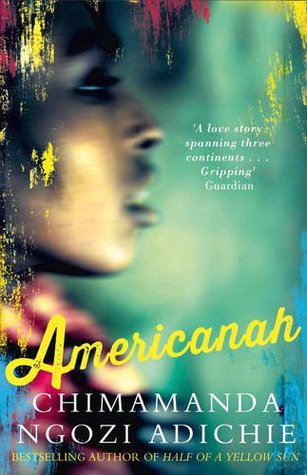
Book Review - Americanah by Chimamanda Ngozi Adichie

Americanah Americanah - 4.5/5

I recently completed the final book in my summer reading list (see autumn TBR post for upcoming autumn list of books to be read). This book took me much longer than I expected to read, as I found myself slowing down to devour every single detail Adichie had put into the pages. I had never before read anything by this author, and to my memory nothing by a Nigerian author at all and I will certainly be back to read some of her others - Purple Hibiscus and Half of a Yellow Sun are currently sitting on my living room bookshelf. Some of the themes covered in the novel were those I had seen in other books and films I have encountered, but they felt born again and fresh.


Firstly, the blurb for those of you not familiar with the story:

As teenagers in a Lagos secondary school, Ifemelu and Obinze fall in love. Their Nigeria is under military dictatorship, and people are leaving the country if they can. Ifemelu—beautiful, self-assured—departs for America to study. She suffers defeats and triumphs, finds and loses relationships and friendships, all the while feeling the weight of something she never thought of back home: race. Obinze—the quiet, thoughtful son of a professor—had hoped to join her, but post-9/11 America will not let him in, and he plunges into a dangerous, undocumented life in London.

Years later, Obinze is a wealthy man in a newly democratic Nigeria, while Ifemelu has achieved success as a writer of an eye-opening blog about race in America. But when Ifemelu returns to Nigeria, and she and Obinze reignite their shared passion—for their homeland and for each other—they will face the toughest decisions of their lives.

Ifemelu and Obinze were extremely well-rounded characters, very raw and very honest - which made them very believable. What I liked most about Ifem's character (ironically) is that she was not always likeable. The majority of the novel is focused on Ifemelu's experiences of a life in America and the return to her homeland in Nigeria. I had never really considered the difference between 'non-American black' and 'black American' before, and Ifemelu (and by extension, Adichie) explores this during her time in America.

I watched an interview with Chimamanda Ngozi Adichie on Youtube, on International Author's Stage in which she explains the difference between an African American (someone who may have been forced to America by slavery) and American African (someone who comes more willingly). An interesting point of Ifemelu and Obinze's stories is that they are not forced from their country by war or famine. The aren't slaves forced to come to another country and leave all they have behind. Poverty isn't forcing them to leave Nigeria, in fact Obinze comes from a solidly middle-class family, while Ifemelu comes from a slightly poorer (but not desolate) situation. Ifemelu questions why when immigrants arrive on American shores with coloured skin, is it immediately assumed that they are fleeing warfare, when maybe all they want is a different life.

'Americanah', the term given to Nigerian people who return after a spell in America, does a great job of placing Ifemelu when she herself feels so displaced. She never feels American, and tries to shake the American accent she adopts. Yet, when she returns to Nigeria she is regularly called 'Americanah' and slips into subliminal American-isms. During her time in America, Ifemelu puts weight on, further losing her Nigerian identity and becoming more American. The author explores the themes of foreignness, growing and changing, returning home and, of course, race. A lot of these themes are very far removed from my everyday, and this made them fascinating to absorb. I enjoyed the paradox of race in America and Nigeria. "Dear Non-American Black, when you make the choice to come to America, you become black. Stop arguing. Stop saying I'm Jamaican or I'm Ghanaian. America doesn't care". You're only black in America, the author teaches us. There is no colour in Nigeria.

Obinze was a much more likeable character than Ifemelu, and as a reader I felt myself rooting for him all the time when he rarely achieved his dreams. He had a life-long obsession with America, only reading American books and investing himself in American culture. He did not make it to America, however, and spent some time in England as an illegal immigrant before being deported. His marriage to Kosi was very far removed from the loving and passionate relationship he experienced with Ifemelu, and this makes you feel for him - such a passionate and loving personality drowning in mediocre.

The movie adaptation of the book is currently in development, which I'm delighted about. Set to star Lupita N'yogo, it is pretty perfect casting. Despite the references to Obinze's small stature, I can't help but see Idris Elba cast in the film (he's not). Though maybe that says more about my Idris Elba obsession than anything.

An exceptional read, best I've had in a long time.